Other Mommy Ending Explained: Twists and Climax
⚠ Spoiler warning: this page reveals major plot details. Prefer it spoiler-free? Read the no-spoiler review.
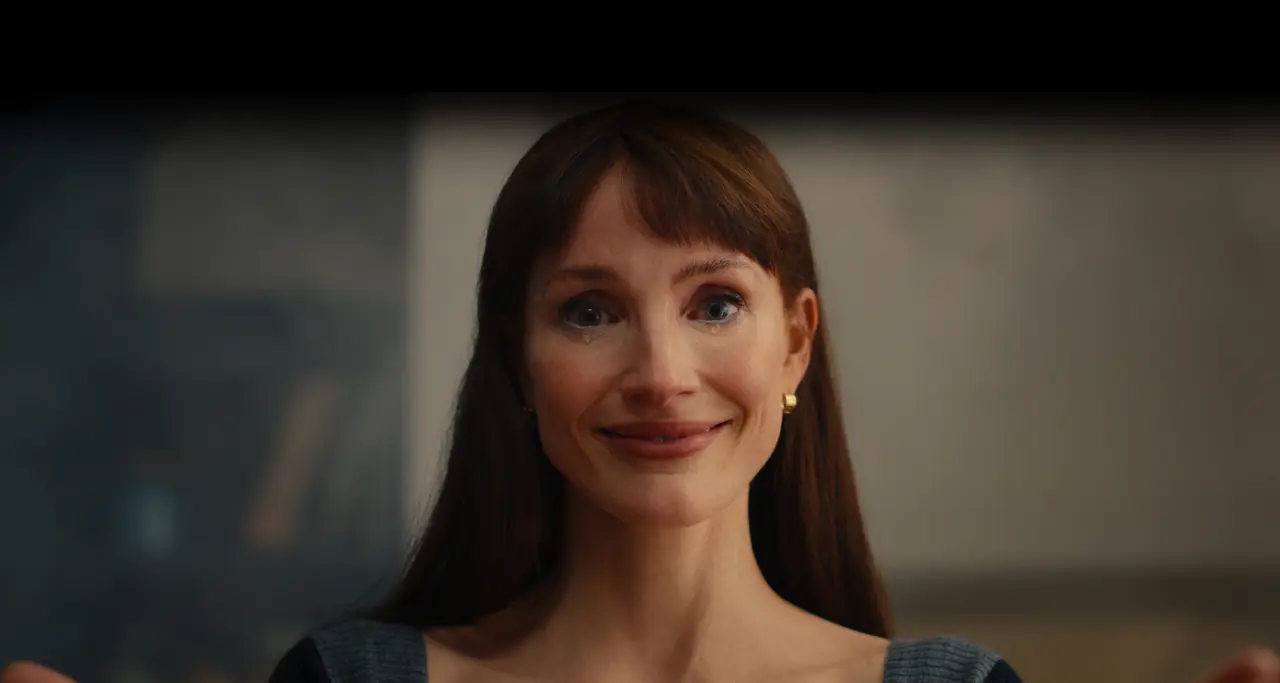
The climax of Other Mommy resolves when seven-year-old Bela confronts the shapeshifting demon in her home. Ursula reveals painful family truths, prompting Bela to remember Grandma Ruth's wisdom about pain being natural. Bela tricks the entity by pretending to surrender before firmly denying permission, destroying the monster while family tensions linger.

Significant spoilers lie ahead for the finale of Other Mommy. Moviegoers seeking an overview without plot twists can read our spoiler-free review before proceeding.
The Demon’s Goal: The Law of Carnation
Director Rob Savage establishes the core threat through the film’s opening epigraph: humans possess one vital gift that demons intensely covet, which is being alive. Throughout the 93-minute narrative, the supernatural entity wearing the appearance of Ursula (Jessica Chastain) stalks seven-year-old Bela (Arabella Olivia Clark). The creature repeatedly asks a haunting question: “Can I go inside your heart?”
Grandma Ruth (Karen Allen) and paranormal investigator Lois (Dichen Lachman) clarify the precise supernatural mechanics at play. The malevolent presence acts as a trickster demon attempting to carnate into a mortal vessel. Supernatural law requires Bela’s full, willing consent to cross that boundary. The demon manipulates reality, distorts household space, and fabricates horrifying illusions specifically to wear down the child’s psychological resistance. By alienating Bela from her family, the creature hopes to make total surrender feel like her only refuge.
The Basement Confession and Family Secrets
The climax begins when the family returns home and barricades themselves inside the basement. Tension peaks as long-hidden truths surface between Bela, Ursula, and Bela’s dad (Jay Duplass). Ursula breaks her emotional silence with a gut-wrenching confession about her internal struggles. She admits that she initially felt terrified of having Bela, viewing pregnancy as an abrupt loss of personal freedom. Ursula affirms her deep love for Bela while simultaneously revealing another family secret: Bela’s dad is not her biological parent, because Ursula conceived Bela while married to another man during an earlier affair.
These revelations mirror the psychological rot that allowed the Other Mommy entity to thrive. Screenplay writer Nathan Elston grounds the terror in authentic marital discord and maternal ambivalence. The entity feeds on Bela’s profound isolation, having previously killed Frank (Arian Moayed) after stoking Bela’s resentment over her mother’s suspected infidelity. Hearing Ursula’s painful honesty pushes Bela into an overwhelming emotional crisis, sparking her desperate sprint upstairs.
How Bela Defeats the Entity
Bela confronts the towering doppelganger upstairs, initially appearing ready to surrender. The Other Mommy offers a tempting bargain, promising Bela that she will experience zero pain if she invites the entity into her chest. This false paradise triggers a vital memory of Grandma Ruth. Ruth previously taught Bela that enduring emotional and physical pain represents an essential, inescapable reality of being human.
Recognizing the deception, Bela uses the demon’s strict permission rules against it. The young girl pretends to open her heart to draw the creature near. Bela then resolutely rejects the monster, repeatedly refusing to grant consent. Her steadfast denial strips the trickster of its power to carnate, destroying the physical manifestation and banishing the nightmare from the home.
Narrative Divergence: Novel vs. Film Climax
Director Rob Savage chose a dramatically different path for the cinematic adaptation compared to Josh Malerman’s 2024 source novel Incidents Around the House. The two finales present distinct outcomes for Bela’s struggle:
- The Adaptation Finale: The film delivers an empowering confrontation where seven-year-old Bela actively outsmarts the entity. By accepting pain as a natural part of existence, Bela weaponizes the demon’s permission rules to destroy the creature.
- The Book Finale: Josh Malerman constructs a far bleaker conclusion in the original text. Bela tells the adults the entity vanished, yet encounters it at Lake Michigan the following morning. Bela permits it into her heart, waking in a vast void while hearing the entity practice her voice.
- Thematic Resolution: Film viewers receive a tale of resilience and agency, whereas novel readers experience a chilling chronicle of demonic possession and loss of self.
Fans interested in exploring these literary shifts further can read our complete book vs movie comparison breakdown.
The Christmas Lights Epilogue and Post-Credits Clue
The narrative leaps forward several months into the winter season for a quiet epilogue. The surviving family members gather outside their home to hang colorful Christmas lights. Harmony seems restored on the surface, yet subtle visual cues suggest lingering danger. Bela watches her mother closely and identifies warning signs that Ursula’s emotional coldness and chronic unhappiness are returning. ComicBasics notes an unsettling physical detail during this scene: Bela spots a scar on Ursula’s neck that mirrors a matching mark upon Bela’s own back.
The credits conclude with one final shock before the house lights come up. A brief post-credits scene reveals the Other Mommy entity staring directly into the lens. The creature places a finger against its lips and whispers “shush” to the audience. You can analyze every detail of this final stinger in our post-credit scene guide.
Two Interpretations: Clean Victory vs. Lingering Threat
The conclusion invites two contrasting readings regarding whether the family truly achieved safety:
Reading One: An Authentic Emotional Victory
The primary reading treats the climax as a triumph of personal growth. Bela successfully processes the heavy secrets uncovered during the basement confrontation. By absorbing Grandma Ruth’s wisdom, Bela accepts that life inherently involves suffering and uncertainty. Denying the entity permission represents Bela’s emotional maturation, allowing her to release childish fantasies of a painless world. In this view, the family survived a harrowing ordeal and genuinely vanquished the demon through honesty and courage.
Reading Two: The Lingering Trickster Threat
A more skeptical reading emphasizes the deceptive nature of the demon. Trickster entities thrive on false security and psychological fractures. Ursula’s returning melancholy during the Christmas lights sequence indicates that the family’s deep-rooted marital discord remains unresolved. Furthermore, the matching neck and back scars imply a hidden metaphysical bond that survived the physical confrontation. The post-credits whisper directly breaks the fourth wall, suggesting that the Other Mommy may simply be biding its time in the shadows.
Core Themes: Maternal Ambivalence and the Cost of Living
At its heart, Other Mommy operates as a psychological exploration of maternal guilt and generational trauma. The entity wears Ursula’s exact face because it embodies the unvoiced anxieties inside the home. Ursula’s admission that motherhood felt like an entrapment gives the demon supernatural leverage over Bela’s young mind.
The resolution celebrates the acceptance of painful realities over comforting delusions. Bela overcomes the creature because she embraces life with all its messy, painful truths. As Grandma Ruth demonstrated, living requires enduring emotional friction. Audiences eager to catch every visual clue can check our guide on where to watch the film in theaters and on future digital platforms.
FAQ
What does the demon want from Bela in Other Mommy?
The supernatural trickster demon covets being alive and seeks to carnate into seven-year-old Bela by demanding her explicit permission.
What secret does Ursula confess in the basement?
Ursula admits that she initially feared having Bela due to losing freedom, while also disclosing that Bela's dad is not her biological father.
How does Bela defeat the Other Mommy?
Bela recalls Grandma Ruth's advice on pain, pretends to offer her heart, and then repeatedly denies permission until the creature perishes.
Does the Other Mommy movie end differently from the book?
The adaptation gives Bela a defiant triumph over the monster, whereas Josh Malerman's novel ends with Bela surrendering to the entity at Lake Michigan.